
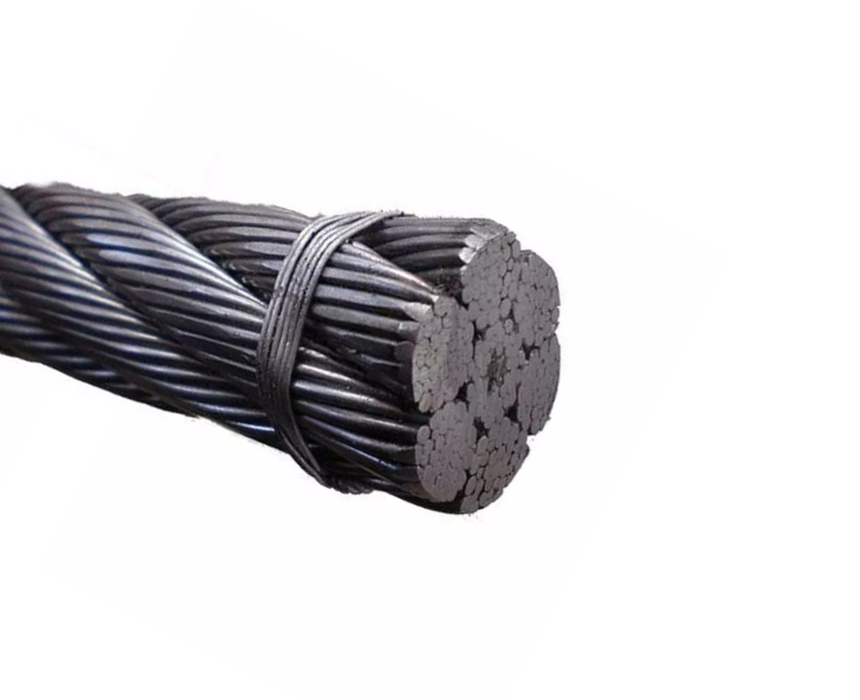
As a leading crane cable manufacturer, Yuantong specializes in crafting high-performance cables that redefine industry standards. Our precision-engineered cables offer unmatched strength, durability, and reliability, ensuring optimal performance in diverse crane applications.

Wire ropes are the most common crane cable types, our wire ropes are constructed from steel wires, offering strength and durability, suitable for various crane applications, from construction to heavy industrial lifting.

Yuantong synthetic ropes are made up of materials like high-performance fibers, provide a lightweight alternative with excellent flexibility, corrosion resistance, and reduced risk of damage to loads.

Our rotation-resistant ropes have a specialized design to minimize twisting during lifting, enhancing stability and control, making them ideal for precision lifting operations.
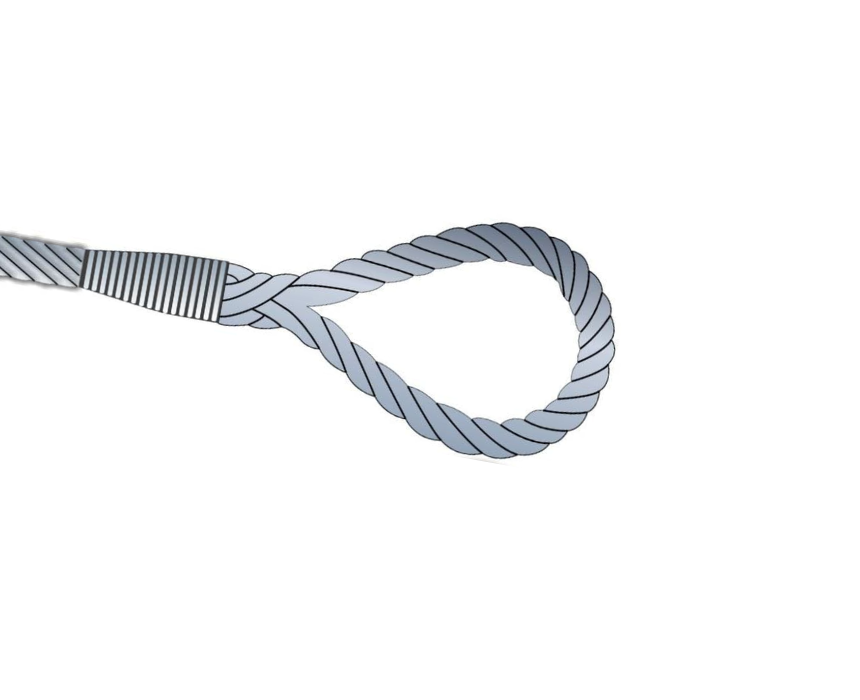
Multi-part lines consist of multiple strands. This kind of cable by Yuantong increases flexibility and reduces overall weight. It offers high strength and is commonly used in heavy-duty lifting applications.

Yuantong aircraft cables, are galvanized for corrosion resistance, versatile and lightweight, suitable for smaller cranes and applications requiring precision and smooth operation.

Compact strand cables we offer have a reduced diameter while maintaining high strength, making them suitable for applications where limited space or weight is a consideration.

Non-rotating cables we designed use to prevent twisting during lifting, enhancing load stability and control, flat crane cables are ideal for applications demanding precision and safety.

Pendant cables we produce are used in pendant control systems, providing a flexible and durable connection between the control pendant and the crane's hoisting mechanism.

Our high-performance ropes, use advanced materials like Dyneema or Spectra, offer superior strength-to-weight ratios, corrosion resistance, and are ideal for demanding lifting applications requiring precision and reliability.

Total Factory Area
Company Employee
Million USD Turnover
Years of Experience
Choose Yuantong for crane cables that exceed international standards. Benefit from a robust tensile strength ranging from 160,000 to 300,000 pounds, a safety factor of 5:1 or higher, and exceptional flexibility with a minimum bend radius. Our cables prioritize reliability, longevity, and adherence to the highest industry benchmarks. Elevate your lifting operations with Yuantong.
Our high-quality crane cable may have a tensile strength ranging from 160,000 to 300,000 pounds, depending on the specific application and industry standards.
Yuantong uses a safety factor of 5:1 or higher, ensuring a significant margin of safety beyond the working load limit.
Crane cables by Yuantong exhibit flexibility with a minimum bend radius that varies based on the cable diameter. As a general guideline, a bend radius of 8 to 10 times the cable diameter is standard.
Our crane cables offer abrasion resistance ranging from 8,000 to 12,000 cycles, measured by the number of cycles until visible wear occurs during testing.
Elevate your lifting operations with Yuantong—unmatched strength, safety, and reliability. Upgrade your crane cables today!
| Specification | Description |
| Material | Steel for wire ropes, high-performance fibers for synthetic ropes. |
| Diameter | Diameter of the crane cable influencing strength and flexibility. |
| Tensile Strength | Maximum load the cable can withstand before breaking. |
| Construction | Number of strands, wires per strand, and lay direction (regular or lang). |
| Flexibility | Minimum bend radius or resistance to twisting during lifting. |
| Safety Factor | Ratio of breaking strength to working load limit. |
| Abrasion Resistance | Resistance to wear and tear, critical for longevity. |
| Corrosion Resistance | Ability to withstand corrosion in various environments. |
| Rotation Resistance | If applicable, resistance to twisting during lifting. |
| Standards Compliance | Adherence to industry standards or regulations for safety and performance. |
| Testing and Inspection Requirements | Specific procedures for ongoing reliability. |

Crane cables are essential for lifting and maneuvering heavy construction materials, facilitating efficient and precise construction processes.
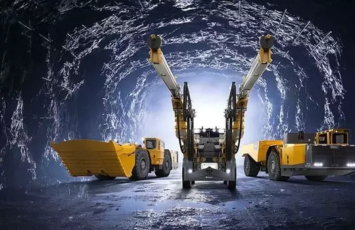
In mining, crane cables are used for lifting and transporting large volumes of ore and materials, contributing to the efficiency of extraction processes.

In ports and shipyards, crane cables are employed to load and unload containers, ensuring goods' smooth and safe movement.

Crane cables assist in the maintenance of power plants by facilitating the installation and repair of heavy equipment and components.
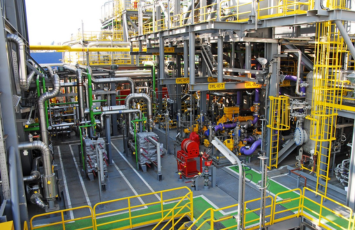
Crane cables play a pivotal role in manufacturing operations, aiding the movement of heavy machinery and materials within industrial facilities.

In aerospace facilities, crane cables are employed for lifting and positioning aircraft components, engines, and other heavy aerospace equipment during assembly and maintenance.
The standard rope used on most cranes is a high-strength steel wire rope. Comprising multiple strands of steel wires, it provides exceptional tensile strength, durability, and resistance to abrasion.
Its flexibility allows for smooth handling, and its robust construction ensures reliable performance in various lifting applications. This wire rope is a fundamental component in crane systems across industries, offering the strength and reliability needed for efficient and safe lifting operations.
Crane cables are commonly made of high-strength materials, with steel being a predominant choice. The steel is configured into wire ropes, consisting of multiple strands twisted together, providing the necessary durability, tensile strength, and flexibility for lifting heavy loads in diverse industrial applications.
The thickness of crane cables, also referred to as the diameter, can vary widely based on the specific application, load requirements, and crane type. Crane cables can range from a few millimeters to several centimeters in diameter.
Depending on the capacity and specifications of the crane system. Specific thickness requirements are determined by factors such as load capacity, flexibility needs, and the type of construction or industry standards applied.